


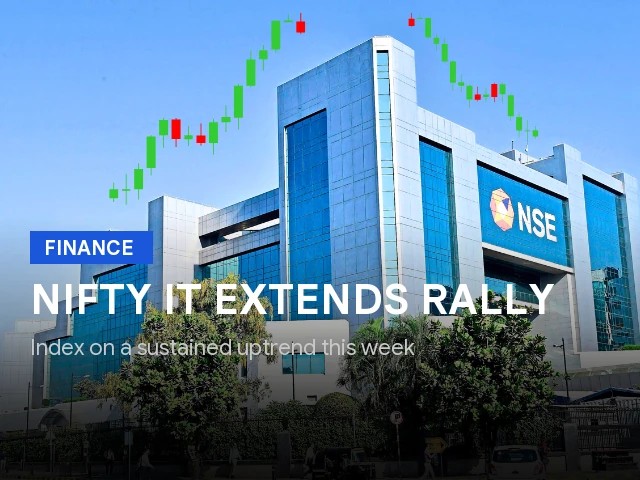
Nifty IT Extends Rally: TCS Infosys Coforge Lead Gains Amid US-Iran Peace Mood



TLDR
- Nifty IT rally extended led by TCS, Infosys, Coforge.
- US-Iran peace mood fuels risk-on in Indian tech.
- IT index outperforms as global cues improve.
- Retail investors should watch near-term levels; Sarthi AI can help.
Can a peace deal between the US and Iran sustain India's tech rally? The latest trading session suggests investors are embracing risk, lifting Indian IT counters such as TCS, Infosys, and Coforge as the Nifty IT index extends its rally amid the risk-on mood.
What drove Nifty IT higher today as TCS Infosys Coforge led the gains?
Nifty IT extended its rally with top gainers including TCS, Infosys, and Coforge. The broader market mood turned risk-on on hopes of a peace deal between US and Iran, which boosted sentiment across equities including IT. Investors rotated into the IT pack, seeking exposure to growth-oriented names amid improving global appetite for risk. The move underscores that Indian IT brands remain a focal point for domestic funds and retail investors as the sector continues to ride strong demand in outsourcing and digital services.
For deeper stock-specific insights on these leads and others, Swastika's Sarthi AI stock assistant can deliver institutional-style research to retail investors.
Which Indian IT stocks led the rally and why did Coforge join TCS and Infosys?
The article highlights TCS and Infosys as primary movers, with Coforge joining the rally. The exact reasons for Coforge's outperformance aren't detailed, but the broader risk-on mood and sector-wide buying interest appear to carry Coforge along with the large-caps. This suggests that investors are favoring a mix of entrenched industry giants and mid-cap IT names, especially those with exposure to digital services and vertical-specific solutions.
How does the US-Iran peace deal mood influence risk appetite and Indian IT stocks?
The news of potential peace talks between the US and Iran has shifted global markets into risk-on territory. In India, that sentiment often translates into buying in sectors considered growth-oriented, including IT stocks such as TCS, Infosys, and Coforge. This mood can push the Nifty IT index higher, though, as always, investors should be mindful of near-term volatility and the possibility of pullbacks if headlines shift or if global cues turn sour.
What should retail investors do next: timing and risk management for IT names?
With the rally in IT stocks, retail investors should balance momentum with fundamentals. Key considerations include valuations relative to earnings growth, exposure to outsourcing demand, and the quality of order books across big names like TCS and Infosys. A disciplined risk approach–setting stop losses, maintaining diversification, and avoiding overconcentration in a single theme–can help manage downside risk. For stock-specific insights, you can use Sarthi AI to compare growth, margins, and valuation across IT names and tailor watchlists accordingly.
FAQ
What triggered the Nifty IT rally?
A risk-on mood driven by news of a potential US-Iran peace deal, lifting IT counters such as TCS, Infosys, and Coforge.
Which Indian IT stocks led the gains in the Nifty IT index?
TCS, Infosys, and Coforge led gains in the Nifty IT index.
How did the US-Iran peace deal mood influence Indian IT stocks?
The peace-deal headlines boosted global risk appetite, supporting the Nifty IT index and the IT names.
What should retail investors consider after this rally?
The article describes gains and a risk-on mood; investors should base decisions on their own analysis and risk tolerance, and consider diversification.
What is Swastika's Sarthi AI and how can it help retail investors?
Sarthi AI is Swastika Investmart's stock assistant that provides institutional-level research on stocks or indices to retail investors, aiding decision-making.
Where can investors get more insights from Swastika's research?
Investors can access Swastika's research reports and the Sarthi AI tool for stock-specific analysis.
Conclusion
The rally in Nifty IT, signals a risk-on mood for Indian tech giants, with TCS, Infosys, and Coforge among the standout gainers. For the retail investor, this environment offers upside potential, but it also brings IT-specific volatility and sensitivity to global macro shifts. The key takeaway is to treat this rally as a prompt to refine your watchlist and approach rather than a guaranteed path to gains.
Next step: adopt a pragmatic mental model–separate the momentum narrative from fundamentals. Use a structured framework to identify quality leaders, set clear risk controls, and reassess IT exposure as global cues evolve. Swastika's Sarthi AI can help you surface high-conviction names and monitor price levels, turning market signals into a disciplined, research-backed action plan.
Open your trading and demat account here
Big Budget





.avif)
.avif)
.avif)
.avif)
.avif)














.avif)
.avif)
.avif)
.avif)
Latest Articles
Nifty IT Extends Rally: TCS Infosys Coforge Lead Gains Amid US-Iran Peace Mood


TLDR
- Nifty IT rally extended led by TCS, Infosys, Coforge.
- US-Iran peace mood fuels risk-on in Indian tech.
- IT index outperforms as global cues improve.
- Retail investors should watch near-term levels; Sarthi AI can help.
Can a peace deal between the US and Iran sustain India's tech rally? The latest trading session suggests investors are embracing risk, lifting Indian IT counters such as TCS, Infosys, and Coforge as the Nifty IT index extends its rally amid the risk-on mood.
What drove Nifty IT higher today as TCS Infosys Coforge led the gains?
Nifty IT extended its rally with top gainers including TCS, Infosys, and Coforge. The broader market mood turned risk-on on hopes of a peace deal between US and Iran, which boosted sentiment across equities including IT. Investors rotated into the IT pack, seeking exposure to growth-oriented names amid improving global appetite for risk. The move underscores that Indian IT brands remain a focal point for domestic funds and retail investors as the sector continues to ride strong demand in outsourcing and digital services.
For deeper stock-specific insights on these leads and others, Swastika's Sarthi AI stock assistant can deliver institutional-style research to retail investors.
Which Indian IT stocks led the rally and why did Coforge join TCS and Infosys?
The article highlights TCS and Infosys as primary movers, with Coforge joining the rally. The exact reasons for Coforge's outperformance aren't detailed, but the broader risk-on mood and sector-wide buying interest appear to carry Coforge along with the large-caps. This suggests that investors are favoring a mix of entrenched industry giants and mid-cap IT names, especially those with exposure to digital services and vertical-specific solutions.
How does the US-Iran peace deal mood influence risk appetite and Indian IT stocks?
The news of potential peace talks between the US and Iran has shifted global markets into risk-on territory. In India, that sentiment often translates into buying in sectors considered growth-oriented, including IT stocks such as TCS, Infosys, and Coforge. This mood can push the Nifty IT index higher, though, as always, investors should be mindful of near-term volatility and the possibility of pullbacks if headlines shift or if global cues turn sour.
What should retail investors do next: timing and risk management for IT names?
With the rally in IT stocks, retail investors should balance momentum with fundamentals. Key considerations include valuations relative to earnings growth, exposure to outsourcing demand, and the quality of order books across big names like TCS and Infosys. A disciplined risk approach–setting stop losses, maintaining diversification, and avoiding overconcentration in a single theme–can help manage downside risk. For stock-specific insights, you can use Sarthi AI to compare growth, margins, and valuation across IT names and tailor watchlists accordingly.
FAQ
What triggered the Nifty IT rally?
A risk-on mood driven by news of a potential US-Iran peace deal, lifting IT counters such as TCS, Infosys, and Coforge.
Which Indian IT stocks led the gains in the Nifty IT index?
TCS, Infosys, and Coforge led gains in the Nifty IT index.
How did the US-Iran peace deal mood influence Indian IT stocks?
The peace-deal headlines boosted global risk appetite, supporting the Nifty IT index and the IT names.
What should retail investors consider after this rally?
The article describes gains and a risk-on mood; investors should base decisions on their own analysis and risk tolerance, and consider diversification.
What is Swastika's Sarthi AI and how can it help retail investors?
Sarthi AI is Swastika Investmart's stock assistant that provides institutional-level research on stocks or indices to retail investors, aiding decision-making.
Where can investors get more insights from Swastika's research?
Investors can access Swastika's research reports and the Sarthi AI tool for stock-specific analysis.
Conclusion
The rally in Nifty IT, signals a risk-on mood for Indian tech giants, with TCS, Infosys, and Coforge among the standout gainers. For the retail investor, this environment offers upside potential, but it also brings IT-specific volatility and sensitivity to global macro shifts. The key takeaway is to treat this rally as a prompt to refine your watchlist and approach rather than a guaranteed path to gains.
Next step: adopt a pragmatic mental model–separate the momentum narrative from fundamentals. Use a structured framework to identify quality leaders, set clear risk controls, and reassess IT exposure as global cues evolve. Swastika's Sarthi AI can help you surface high-conviction names and monitor price levels, turning market signals into a disciplined, research-backed action plan.
Open your trading and demat account here

Motilal Oswal Bets on Indian Bank Stocks: HDFC Bank ICICI Bank Shriram Finance AU Small Finance Bank Nuvama – What Retail Investors Should Know
Key Takeaways
- Motilal Oswal's latest bets center on Indian banks, led by HDFC Bank and ICICI Bank.
- Shriram Finance, AU Small Finance Bank, and Nuvama broaden the financials tilt.
- Retail investors should focus on durable earnings and valuations in financials.
- Diversify and stay aligned with risk tolerance amid rate cycle shifts.
In a move that could influence how Indian retail investors think about financials, Motilal Oswal Financial Services highlighted a set of bank. The full list includes HDFC Bank, ICICI Bank, Shriram Finance, AU Small Finance Bank, and Nuvama. This article breaks down what the picks mean for your portfolio and how to translate a broker's note into a practical investment plan.
Motilal Oswal's latest bank stock bets explained: the five names in focus and why they matter
HDFC Bank and ICICI Bank are the anchors. As the two largest private banks by market capitalization in India, they benefit from strong retail deposit bases, scalable loan books, and robust risk controls. The broker's note signals continued confidence in these franchises, which have delivered consistent earnings growth and resilient asset quality in various rate environments. Shriram Finance, an established NBFC with a focus on retail lending, adds a different flavor by targeting consumer finance in a segment where demand remains sticky. AU Small Finance Bank provides a microcosm of the large private bank growth story in a smaller, more granular format, with expansion driven by focused lending and improving asset quality. Nuvama rounds out the list, representing the convergence of wealth management and research for Indian retail investors and signaling the value of integrated financial services in a volatile market.
What does this mean for Indian retail investors
For retail investors, the list underscores a tilt toward high-quality private banks that have historically shown resilience, stable earnings, and the ability to grow deposits and loans even as macro conditions shift. This can offer a degree of ballast to a stock portfolio dominated by financials, particularly in a market where cyclicals and tech have shown more volatility. Yet valuations in top private banks have stretched in the past few years, so the emphasis on HDFC Bank and ICICI Bank is a reminder to balance potential returns with price discipline. The inclusion of Shriram Finance and AU Small Finance Bank points to a continuum in the financials space, from large players to niche lenders with improving asset quality and expanding footprints. Nuvama's presence hints at the growing appetite for integrated research and advisory offered through fintech-enabled platforms, which may help retail investors navigate this sector better.
Why Shriram Finance AU Small Finance Bank and Nuvama feature in Motilal Oswal bets
Shriram Finance brings NBFC exposure with a strong consumer finance footprint, which in turn benefits from steady retail credit demand. AU Small Finance Bank demonstrates the bank's ability to grow in a controlled manner with a focus on disciplined lending and improving coverage. Nuvama's inclusion signals a broader trend toward offering research and wealth management in one place, a feature that can be beneficial to retail investors seeking a holistic view of markets. The combination of these names with HDFC and ICICI Bank suggests a strategy of combining quality, scale, and growth opportunities across different segments of India's financial sector.
What are the risks and what should retail investors do next
As with any bank-focused strategy, a few macro headwinds could impact performance. Interest rate changes, inflation, and RBI policy stance can influence bank net interest margins and credit costs. A sector with high valuations requires careful entry and exit discipline to avoid short-term volatility turning into long-term underperformance. If you are considering aligning with this list, you might opt for a core allocation to the high-quality banks while adopting a satellite approach to NBFCs and smaller banks. A structured approach–defining your risk tolerance, setting a clear time horizon, and using stop-loss levels–can help you navigate the risk-reward framework. And when you want deeper numbers and a granular view of each name, Swastika's Sarthi AI stock assistant can provide institutional-level research to compare these names on fundamentals, valuations, and risk metrics.
One essential caveat: broker picks reflect a particular view, not a guaranteed pathway to profits. Use the list as a guide rather than a blueprint and ensure your decisions are aligned with your goals and constraints. A practical step is to start with a small core exposure to HDFC Bank and ICICI Bank, then gradually add the others as your comfort with the sector grows and as earnings and macro signals validate the case.
FAQ
Which five stocks are included in Motilal Oswal's latest bank stock bets?
HDFC Bank, ICICI Bank, Shriram Finance, AU Small Finance Bank, and Nuvama.
What sector is the focus of Motilal Oswal's bets?
Banking and financial services, with emphasis on large-cap banks and select NBFCs.
Should retail investors copy Motilal Oswal's picks?
Not necessarily. Use the picks as a signal, and align investments with your own risk tolerance, time horizon, and diversification needs.
What factors could affect the performance of these bank stocks?
Macro factors such as interest rate policy, credit cycles, inflation, and overall economic growth, along with valuation levels.
Conclusion
For retail investors, Motilal Oswal's battery of bank stock bets signals a continued preference for financials, particularly high-quality private banks with durable earnings. The story is not a buy signal by itself, but it gives you a framework to examine valuations, earnings quality, and growth opportunities across India's financial sector. The practical takeaway is to think in terms of risk-adjusted ballast–core holdings in the stalwarts, complemented by selective bets in NBFCs and smaller banks where fundamentals are improving and valuations still look reasonable.
Open your trading and demat account here
Brigade Enterprises Bonus Issue: 10% Rally, 22% Dip Explained for Indian Retail Investors
Key Takeaways
- Brigade Enterprises rallied ~10% after the bonus issue, despite a 22% prior plunge.
- The move is likely sentiment-driven, not a fundamental upgrade.
- Retail investors should avoid chasing price moves and assess fundamentals.
- Use Swastika's Sarthi AI stock assistant for deeper, institutional-grade analysis.
When Brigade Enterprises announced a bonus issue, its stock jumped about 10% in the immediate trading session, even after a prior 22% decline. This juxtaposition–short-term strength after a corporate action on the backdrop of a sizable prior fall–creates a moment of tension every retail investor should study. In this article, we unpack what this price action means, how to interpret it, and what it implies for the typical Indian investor using Swastika Investmart's tools to frame a decision.
brigade enterprises bonus issue impact on share price
A bonus issue is a corporate action that issues additional shares to existing shareholders at no cost, increasing the total outstanding shares. While it may improve liquidity and expand the investor base, it does not inject new cash into the company and typically does not change the fundamental earning capacity of the firm immediately. The Economic Times piece notes Brigade Enterprises saw a roughly 10% rally after the bonus announcement, even though the stock had already swung down by about 22% earlier. That price move is more a story of market mechanics–share-count adjustment, demand-supply dynamics, and speculative trading–than an immediate signal of better business prospects.
From a value perspective, the post-bonus rally should be interpreted with care. An increase in share count can dilute earnings per share (EPS) unless the company funds growth or the price rises proportionally. Hence, a 10% price rise is not a guaranteed predictor of future profitability. For a retail investor, the key takeaway is to separate the effect of the corporate action on the stock's price from any change in the companys fundamental fortunes.
why brigade enterprises rallied after bonus issue
The 10% rally following the bonus issue is consistent with a typical market reaction where traders exhibit a short-term price bounce around corporate actions. Such moves can be driven by perceived improvements in liquidity, increased investor interest, or a temporary mismatch between supply and demand after new shares are issued. However, the article emphasizes that the rally should not be mistaken for a fundamental improvement in Brigade Enterprises earnings or cash flows. The earlier 22% plunge suggests the stock has been volatile and may have priced in risks that are not automatically resolved by a bonus issue.
In short, the rally's drivers are likely technical or sentiment-based rather than reflective of a credible upgrade in the companys core business. This is a reminder to separate price action from business fundamentals and to consider the broader macro environment and sector trends when interpreting such moves.
For investors seeking a clearer view, a methodical approach can help. Look at the companys balance sheet, debt levels, project pipeline, and cash flow visibility before forming a judgment about whether the stock deserves new capital. If you want a deeper, numbers-driven perspective, you can request a tailored report via Sarthi to evaluate Brigade Enterprises in a multi-quarter framework.
how should indian retail investors interpret brigade enterprises price action
Indian retail investors should view the post-bonus rally as a data point rather than a signal of immediate value creation. The key takeaways are: (1) price moves following a corporate action can be short-lived and do not guarantee future profitability; (2) a prior drawdown may reflect risk factors that require fundamental recovery; (3) always corroborate price action with fundamentals and sector trends. In Brigade Enterprises case, the 10% rally occurred within days, but there is no detailed information in the article about improvements in earnings, order book, or balance-sheet strength that would justify sustained upside.
To translate price action into a potential investment decision, use a structured framework. Compare valuations with sector peers, assess net debt, and verify the sustainability of any reported project revenue or backlog. If your plan is to invest, you might want to see how Brigade stacks up against comparables before committing capital; Sarthi can help by summarizing results and benchmarking against peers in the real estate sector.
what next for brigade enterprises investors after the rally
The prudent course after a 10% rally is not to chase the stock higher but to seek clarity on fundamentals. Watch for upcoming quarterly results, management commentary on project pipelines, debt reduction plans, and any dividend announcements that could influence long-term value. In the absence of a credible fundamental upgrade, investors should be prepared for possible volatility and mean reversion as the market digests the corporate action and any accompanying news.
Before taking a position, align this stock with your risk tolerance and investment horizon. If you are a long-term investor, you may await more visibility on Brigade Enterprises' order book and cash flow generation. If you are a short-term trader, acknowledge the potential for volatility around corporate actions and implement disciplined risk management. Ensure that you do not over-allocate to a single name and maintain a balanced portfolio.
FAQ
What happened to Brigade Enterprises stock after the bonus issue?
The article notes a roughly 10% rally after the bonus issue, while the stock had previously fallen about 22%.
Why did Brigade Enterprises rally after the bonus issue?
The rally is described as sentiment-driven and not a fundamental upgrade; it reflects price action around a corporate action rather than a change in business fundamentals.
Should Indian retail investors buy Brigade Enterprises after this move?
The article suggests caution and emphasizes focusing on fundamentals rather than chasing short-term price moves.
What should I watch next for Brigade Enterprises?
Look for upcoming quarterly results, management commentary on projects, debt levels, and any new information that could affect fundamentals.
How can Sarthi help with Brigade Enterprises analysis?
Sarthi provides AI-driven, institutional-grade research on stocks, helping retail investors analyze Brigade Enterprises beyond headline price moves.
Conclusion
In the near term, Brigade Enterprises’ 10% rally after a bonus issue should be interpreted with caution. Price moves around corporate actions are common in Indian markets and often reflect supply-demand dynamics more than a refreshed business outlook. As a retail investor, keep your focus on fundamentals, not headlines; use structured checks to assess whether the stock’s valuation remains attractive given its sector and risk profile. The practical takeaway is to adopt a disciplined approach: treat a bonus issue like a technical signal in the price ladder, not a guarantee of higher earnings, and look for credible catalysts before committing capital.
Open your trading and demat account here

Sensex Up 250 Points, Nifty Above 24000: What Next for Retail Investors
Key Takeaways
- Sensex rises over 250 points; Nifty trades above 24,000.
- This marks the fourth straight session of gains.
- Near-term direction depends on global cues and domestic data.
- Retail investors should maintain risk controls and keep a watchlist.
In a session that grabbed the attention of every retail investor, the Indian equity market surged with Sensex up more than 250 points and Nifty trading above the 24,000 mark as Dalal Street extended gains for the fourth straight session. The big question on every investor's lips is simple: is this momentum sustainable or a brief pause before the next move?
Sensex rises over 250 points today and Nifty above 24,000: what a retail investor should watch
The Sensex's rise beyond 250 points while Nifty holds above the 24,000 level signals continued upside momentum for the fourth session running. While a single session does not confirm a trend, staying alert to levels, volatility, and risk appetite helps you stay aligned with your investment plan.
Which sectors drove the rally today as Sensex gains and Nifty crosses 24,000
The article describes a broad-based move rather than a single sector lead, suggesting that multiple segments contributed to the rally. For a retail investor, this underscores the value of diversification and monitoring sectoral rotations as the market evolves.
How global cues and domestic factors shape the near-term direction of Sensex and Nifty
The market's trajectory in the near term is shaped by a mix of global risk sentiment and domestic data. The article notes that the ongoing gains come amid cautious optimism on global markets and evolving domestic factors. Track global cues like central bank commentary and commodity prices, along with domestic macro releases, to gauge whether the rally can sustain.
Risks to monitor after the fourth straight session gains in Indian equities
Even as momentum shines, risks such as volatility spikes and potential profit-taking exist after a sustained rally. The piece emphasizes caution and a balanced approach, reminding investors not to chase momentum blindly.
Practical next steps for retail investors after a market upmove
1) Revisit your watchlist and identify high-quality, liquid names with solid earnings visibility. 2) Apply risk controls like position sizing and stop-loss discipline to protect capital. 3) Consider a tiered exposure approach–add on pullbacks and trim on overextensions. 4) For deeper, institution-level stock ideas and index analysis, Swastika's https://www.swastika.co.in/sarthi offers research on any stock or index to retail investors.
FAQ
What were the current levels of Sensex and Nifty described in the article?
Sensex rose over 250 points and Nifty traded above 24,000 as Dalal Street extended gains for the fourth session.
How many sessions of gains have been observed in the article?
The article notes the market extended gains for the fourth straight session.
What does the article suggest about the near-term market direction?
It suggests that what lies ahead will depend on global cues and domestic factors, indicating cautious optimism rather than a guaranteed trend.
Were any specific sectors highlighted as leaders in the rally?
The article describes a broad-based move rather than a single sector lead, noting gains across major indices.
What should retail investors do after this market upmove?
Build a watchlist, apply risk controls, and consider a staged exposure approach; use research tools like Sarthi AI for stock ideas and validation.
Conclusion
The fourth straight session of gains and Nifty above 24,000 signal momentum, but the investor's plan should remain disciplined. Build a watchlist of high-quality names, set clear risk controls, and let price action guide entries and exits. If the momentum continues, consider adding on validated pullbacks while staying alert for any signs of a shift in trend.
Open your trading and demat account here
Anil Agarwal stock 500% AI boom: Beyond Vedanta
Key Takeaways
- Anil Agarwal's non Vedanta stock surged 500% on the AI boom.
- The move was driven more by AI hype than immediate fundamentals.
- Retail investors should tread carefully and perform thorough due diligence.
- Swastika Investmart offers AI-powered research tools to evaluate such moves.
One AI-fueled stock story is rewriting the playbook for Indian retail investors: a non Vedanta stock in Anil Agarwal's orbit jumped 500% in a matter of weeks. The Economic Times piece Beyond Vedanta highlights how the AI surge lit a fire under this stock, pulling it into the limelight even as the Vedanta group remained the more familiar name. This long-form look breaks down what happened, why the surge happened, and what it could mean for you as a retail investor trying to separate signal from hype.
Anil Agarwal stock beyond Vedanta: Sterlite Technologies AI boom 500% surge
The article points to Sterlite Technologies as the other Anil Agarwal stock in the promoter group that allegedly surged as much as 500% during the AI rally. While Vedanta and Hindustan Zinc anchor the group’s public image, Sterlite Tech’s ascent illustrates how AI enthusiasm can lift stocks tied to technology and connectivity narratives even when near-term earnings visibility remains uncertain. Sterlite Tech, a player in telecom infrastructure and fiber networks, benefited from investors sweeping AI, data center expansion, and digital connectivity into one clean growth story. For a retail investor, the core takeaway is simple: strong family ties or brand familiarity can aid momentum, but they don’t guarantee sustainable, fundamentals-driven gains.
Why did Sterlite Technologies rally during the AI boom? AI adoption and market hype
Market commentators cited in the ET piece suggest AI optimism created a contagion effect. Investors rotated into tech-enabled names tied to AI narratives, data logistics, and network infrastructure–often before earnings momentum or clarity on future cash flows materialized. This dynamic underscores a broader reality: in AI-driven markets, sentiment can push prices higher even when fundamentals lag or remain ambiguous in the near term.
What retail investors should learn from AI-driven surges in Indian equities
First, quantify risk versus reward. A 500% rally in a short window is remarkable, but it can reverse quickly if hype fades or liquidity thins. Second, scrutinize the business model and the earnings trajectory behind a surge. If the stock rides a narrative with limited visible catalysts for earnings upgrades, it carries higher downside risk. Third, think about diversification and position sizing. Avoid allotting an outsized portion of your portfolio to a single AI-driven play. Finally, lean on disciplined research and credible risk checks; rely on robust analysis rather than momentum alone.
How to position your portfolio in the AI powered market rally
Adopt a framework that lets you participate in AI-driven opportunities without overexposing yourself to hype. Allocate a defined risk budget for speculative bets, couple them with a core, earnings-led allocation, and set clear stop-loss or exit criteria. Consider balancing rapid AI narratives with steadier earnings themes so your overall portfolio remains resilient when the next wave of news arrives. The aim is to capture upside without compromising long-term capital preservation.
FAQ
What is the other Anil Agarwal stock that exploded 500% on AI boom?
Sterlite Technologies Ltd, the non Vedanta stock in the Anil Agarwal group highlighted as having surged about 500% during the AI boom.
What drove Sterlite Technologies higher during the AI rally?
The article attributes the move to AI optimism and market hype around data networks and AI-related infrastructure, rather than a clear near-term fundamental uplift.
Should I chase AI-driven rallies in Indian midcaps?
The article suggests caution: while AI narratives can create quick gains, valuations can become stretched and fundamentals may lag, increasing downside risk for retail investors.
What should retail investors do to evaluate AI-led moves?
Focus on valuations, earnings visibility, liquidity, and risk management; use a disciplined approach with position sizing, diversification, and credible research insights rather than momentum alone.
How can Swastika Investmart help with AI-driven stock ideas?
Swastika Investmart offers research reports and Sarthi, an AI stock assistant that provides institutional-level research to help retail investors evaluate AI-led opportunities with risk controls.
Conclusion
Next-step mental model: use a two-bucket framework–one bucket for AI narrative opportunities with tight risk controls, and another for quality, cash-generating businesses. Start modestly, measure outcomes, and scale only when the thesis behind the AI move sustains earnings visibility and valuation comfort. This approach lets you participate in the upside of AI while protecting capital in volatile markets.
Open your trading and demat account here

FIIs Buy India Govt Bonds June 2026: What Retail Investors Should Watch Now
Key Takeaways
- Foreign investors added $1.84B to Indian government bonds in June, the highest in 16 months.
- The inflows point to persistent foreign demand and can influence near-term yields and currency moves.
- Watch the flow trend and RBI cues to gauge bond risk for your portfolio.
- For retail investors, align debt exposure with your horizon and risk tolerance.
how sustained FII inflows influence near-term yields
The most immediate effect of FIIs buying Indian government bonds is higher prices for existing gilts, which translates into lower yields in the near term. This can help funds that hold longer-duration gilts and create a window for tax-efficient long-hold strategies. However, the path of yields will still depend on domestic inflation and policy signals from the RBI as well as global rate moves. For a retail investor, the practical takeaway is to check your debt fund's duration and exposure to gilts and to avoid chasing yield moves that exceed your horizon.
what June 2026 foreign inflows imply for rupee stability and RBI policy direction
Rupee stability tends to improve when inflows are steady, easing external financing pressure and reducing abrupt moves in the currency. Sustained FII demand can also influence RBI policy signaling; if inflows persist, the central bank may adjust liquidity management and its rate stance in a way that supports a steady yield curve. For investors, this means tracking RBI commentary, inflation prints, and USD/INR moves in parallel with bond prices to gauge the real risk-reward in duration bets.
how retail investors can position debt funds in light of rising foreign demand
With foreign demand shaping the bond risk environment, retail investors can consider debt funds that align with their horizon and risk tolerance. If you expect yields to stay firm in the near term, longer-duration gilt funds might offer price gains; if you anticipate policy shifts or higher inflation pressure, shorter-duration funds or high-quality corporate debt funds could reduce risk. This regime emphasizes liquidity and credit quality, so keep duration within your comfort zone and use diversified funds to manage surprises.
what risks to watch if foreign inflows reverse and rates rise
Foreign inflows can reverse if global risk appetite deteriorates, U.S. yields rise, or domestic inflation surprises to the upside. A reversal would typically push bond prices down and yields higher, which can test debt funds with longer duration and, by extension, riskier price moves. The rupee can also become more volatile during abrupt shifts in flows. To guard against this, maintain a balanced debt allocation with a clear duration target and prefer high-quality, liquid securities over concentrated bets on a single issue.
FAQ
Which Indian bonds benefit most from FIIs inflows?
Typically high-quality, very liquid government securities with shorter to mid maturities see the fastest price gains when demand is strong, while longer maturities gain when the entire yield curve shifts lower. The exact winners depend on the RBI's liquidity stance and macro data.
How can a retail investor gain exposure to Indian government bonds?
Most retail investors access government debt through debt funds, gilt funds, and ETFs rather than direct primary-market purchases. These vehicles offer liquidity and professional management aligned to your risk tolerance and horizon.
Does rising FII inflows mean yields will stay low for six months?
Not guaranteed. While inflows can push prices up in the near term, yields depend on inflation, policy signals, and global rate moves. Investors should avoid assuming a one-way move.
What risks should I monitor if FII inflows reverse?
Reversals can lead to higher yields, price declines in debt funds, and possible rupee volatility. A defensive approach—shorter duration, high-quality holdings, and adequate liquidity—helps weather such shifts.
How does rupee sentiment relate to debt inflows?
Stronger, steadier inflows can support the rupee by reducing external financing strain, while sharp reversals can drive volatility in both the currency and rates. Monitoring USD/INR alongside RBI commentary gives a fuller picture.
Conclusion
Foreign demand for India's government debt has become a meaningful flow-driven backdrop that can shape yields and the rupee in the months ahead. Investors who anchor bond allocations to a clear horizon and watch flow signals will navigate the coming period with a better sense of risk and opportunity; treat inflows as a backdrop to your plan, not a forecast to chase.

.avif)
.avif)

.avif)




START YOUR INVESTMENT JOURNEY
Get personalized advice from our experts
- Dedicated RM Support
- Smooth and Fast Trading App
